All posts by Pushkar Pharma

Top 10 Best Third party Medicine Manufacturers in India

Best Third Party Medicine Manufacturers in India 2026 – Top Third Party Pharma & Contract Manufacturing Companies List

Looking for reliable third party medicine manufacturing companies is critical for growing healthcare brands that want to increase the range of their products without building a company. In fact, third party pharma manufacturing has become the go-to model for brands entering the Indian market. The pharmaceutical industry of India offers huge manufacturing infrastructure where various contract partners develop formulations in the form of tablets, capsules, injectables, and syrups using WHO-GMP protocols. Hence, by outsourcing pharmaceutical manufacturing processes, it is possible to minimize financial risks and also get an opportunity to use advanced testing laboratories and packaging systems.

Establishment of an independent manufacturing plant typically requires 2 crore to 10 crore of investment. Meanwhile, the option of third-party partnership allows launching commercial ranges with initial investments of 50 thousand to 5 lakh rupees. Therefore, cooperation with existing manufacturing units helps brands to concentrate exclusively on doctor detailing, marketing and development of regional distribution channels across the Indian territory.

How to Select a Reliable Third Party Medicine Manufacturer in India?

A reliable third party medicine manufacturer in India can be identified by checking five key factors: valid WHO-GMP and DCGI approvals, in-house testing facilities, batch turnaround time, minimum order quantity flexibility, and packaging quality. Verifying these before signing a contract helps healthcare brands avoid compliance issues, production delays, and quality failures once manufacturing begins. Each factor is explained below to help you evaluate a manufacturing partner with confidence.

Verification of WHO-GMP Regulatory Approvals

It is always necessary to make sure that third party medicine manufacturing companies have valid WHO-GMP, ISO 9001:2015, and DCGI manufacturing approvals. Thus, certified units help to ensure compliance of your drug formulations with mandatory safety and efficacy standards.

Checking the In-House Testing Facilities

You need to pay attention to the presence of advanced testing facilities equipped with HPLC and stability chambers. Therefore, in-house quality controls help to confirm the purity and potency of the ingredients.

Evaluating Production Batch Turnaround Times

Reliable third party drugs manufacturers usually manage finished orders within 20 to 30 days. Hence, quick batch execution will prevent the problem of retail stock shortages.

Considering Minimum Order Quantity Options

Flexible options for Minimum Order Quantity beginning with 10 thousand tablets or 5 thousand liquid formulations are essential for preserving cash flow for pharmaceutical startups.

Choosing Packaging and Labeling Services

It is important to find manufacturers that offer such packaging options as leak-proof Alu-Alu, blister, and bottle packing lines. In addition, customized styling of labeling will help you to create strong brand differentiation and appeal among pharmacies.

List of Top 10 Best Third Party Medicine Manufacturers in India

Below is our curated top 10 pharmaceutical third party manufacturing companies in India list, chosen based on certifications, infrastructure and reliability.

Pushkar Pharma

Pushkar Pharma works with WHO-GMP-approved facilities that specialize in sterile injectables, ophthalmic solutions, and oral drops. The best third party medicine manufacturer in India produces more than 100 high-quality formulations, including antibiotics, analgesics and multivitamins. Having ISO certifications since 1993, the company offers customers the ability to produce formulations with customizable packaging and reliable 72-hour deliveries to domestic markets.

Theon Pharmaceuticals Ltd.

Theon Pharmaceuticals is one of the leading pharmaceutical manufacturing units based in Himachal Pradesh. The company manufactures different therapeutic ranges, including beta-lactam tablets, hard gelatin capsules and dry syrups. Holding WHO-GMP, ISO, and other accreditations, Theon offers high-output batches. Thus, healthcare brands rely on their fast deliveries, advanced analytical facilities and effective supply chains.

Akums Drugs & Pharmaceuticals Ltd.

Akums Drugs & Pharmaceuticals ranks among India’s largest third party medicine manufacturing companies and produces more than 12% of the formulations. The company has 15+ WHO-GMP-approved manufacturing facilities. Akums Drugs & Pharmaceuticals manufactures tablets, softgels, injectables and hormonal ranges. Moreover, continuous investments in R&D make it one of the preferred manufacturing partners for major pharma corporations.

Sun Pharmaceutical Industries Ltd.

Sun Pharma offers high-end contract manufacturing services in addition to the production of global branded products. Due to the modern facilities with global certifications, Sun Pharma manufactures complex formulations, specialty drugs, neuropsychiatry ranges and chronic care tablets. Technical skills help to ensure chemical batch consistency. Consequently, brand companies use the technical scale of Sun Pharma to ensure international compliance and quality controls.

Cipla Ltd.

Cipla provides state-of-the-art third-party manufacturing services and specializes in respiratory formulations, inhalers and oral solid doses. Having a long history of successful formulation, WHO-GMP facilities of Cipla comply with global safety guidelines. Hence, brands have access to advanced manufacturing technologies, stable aerosol drug delivery systems and quality assurance protocols in complex therapeutic segments.

Lupin Ltd.

Lupin is a global pharmaceutical leader that offers specialized contract production in anti-tuberculosis, cardiovascular and diabetes formulations. Having WHO-GMP and US-FDA approval for manufacturing sites, Lupin helps partner companies to receive high-quality formulations with stable data and sophisticated packaging configurations that ensure long-term drug potency.

Dr. Reddy’s Laboratories Ltd.

Dr. Reddy’s Laboratories works with modern contract manufacturing units that focus on active ingredients, biosimilars and oral solids. The best company for third party medicine manufacturing in India provides full support from formulation development to final commercial packaging. Hence, advanced analytical laboratories and quality control processes ensure that every batch complies with international pharmacopoeia standards.

Zydus Lifesciences Ltd.

Zydus Lifesciences works with modern facilities that manufacture biologicals, vaccines, tablets and topical ointments. Maintaining ISO and WHO-GMP compliance, Zydus Lifesciences offers partners the opportunity to work with high-speed automated packaging facilities and a robust QA team. Hence, companies get the opportunity to scale production quickly without facing bottlenecks in capacity.

Alkem Laboratories Ltd.

Alkem Laboratories operates with an extensive production network of top-tier anti-infective, gastrointestinal and pain management medicines. WHO-GMP-compliant units of this best company for third party medicine manufacturing in India help to benefit from cost-effective batch production rates, extensive formulation capabilities and quick product deliveries.

Mankind Pharma Ltd.

Mankind Pharma operates with scalable third party manufacturing for fast-moving consumer healthcare products, OTC drugs and prescription formulations. Having high-capacity manufacturing facilities equipped with granulating and tableting machines, Mankind Pharma helps to receive highly competitive net pricing for batch sizes, full packaging customization and nationwide distribution.

What Services Do Top Third Party Medicine Manufacturers Provide?

Top third party medicine manufacturers provide four main services: formulation development, regulatory and licensing support, custom packaging, and commercial batch production. Regulatory support takes 5–7 days, formulation development takes 10–15 days, packaging takes 7–10 days, and full batch production takes 15–20 days. See the table below for full details on each service.

Service Category Operational Description Standard Turnaround Time Strategic Business Benefit
Formulation Development Customization of chemical ratios and active ingredient dosages 10–15 Days Creates differentiated product offerings for target markets
Regulatory & Licensing Regulatory documentation, approvals, and Certificate of Analysis (CoA) support 5–7 Days Supports legal compliance and helps reduce regulatory delays
Custom Graphic Packaging Foil, blister, carton, and label design with custom branding 7–10 Days Strengthens brand presentation across pharmacy and retail channels
Commercial Batch Production Large-scale tableting, liquid filling, and sterilization 15–20 Days Delivers market-ready inventory with efficient manufacturing costs

The Bottom Line

Outsourcing production to certified third party medicine manufacturing companies is the fastest and most cost-effective solution to expand your pharmaceutical brand without heavy infrastructure investments. Partnering with the right third party manufacturing pharma companies also gives you access to advanced R&D and testing without the overhead. Moreover, WHO-GMP factories will ensure safety as well as total compliance with the regulations.

Thus, using the services of such third party medicine manufacturing firms as Pushkar Pharma, you will get sterile injectable medicines, special drops, unique packaging & fast delivery all over the country. Work with top-quality third party drugs manufacturers like Pushkar Pharma today in order to optimize your supply chain and increase profits.

Frequently Asked Questions

How much money is required as a minimum for third party medicine manufacturing?

The minimum budget for third party medicine manufacturing companies ranges from 50 thousand to 2 lakhs. The budget includes small batch manufacturing, packaging design & licensing. 

Is a Wholesale Drug License necessary for third party manufacturing? 

Yes, it allows your company to market, store, and distribute pharmaceutical products legally across India.

What certifications should I check in a contract manufacturing unit?

It is always necessary to check WHO-GMP, ISO 9001:2015, and DCGI manufacturing approvals. These certifications ensure compliance with safety, hygiene, and quality standards.

How many days will the first product batch be delivered within?

It would take 30 days to deliver the first product batch because of artwork and label approvals. However, repeat batches will be delivered within 15 to 20 business days.

What is the difference between third party and PCD pharma manufacturing?

Third party manufacturing involves large custom batch production under your own brand name. On the contrary, the PCD model implies regional distribution rights for pre-existing parent company brands.

Which packaging styles offer the best protection against humidity?

Alu-Alu blister packaging provides maximum protection against ambient humidity, light and heat. Hence, it increases the shelf stability of sensitive formulations like antibiotics and multivitamins.

Can I order small batch sizes as a startup pharma brand?

Yes, many best third party medicine manufacturer in india choices accept low initial Minimum Order Quantity beginning with 10 thousand tablets or 5 thousand bottles. 

How are net production rates calculated by contract manufacturers?

Prices are calculated according to the cost of raw materials, packaging types, batch size and testing charges. Larger batch volumes greatly decrease unit prices for brand owners.

What happens if a manufactured batch fails quality control tests?

If a batch fails quality control tests, then the lot will be rejected. Good third party medicine manufacturing companies reformulate and remanufacture the batch at their own expense in order to protect patient safety.

Why do major pharma brands choose contract manufacturing over owned plants?

Contract manufacturing eliminates huge capital expenditures for land, heavy machinery and maintenance. Hence, brands allocate their capital for marketing, doctor detailing and sales.

Pharma Manufacturer & Exporter | Global Medicine Suppliers from India - Pushkar Pharma

Pharma Exporters & Medicine Manufacturers | Global Manufacturing from India

Every year, healthcare systems across Africa, Central Asia, and Eastern Europe depend on pharma exporters who can guarantee two things: consistent medicine quality and delivery they can plan around. Pushkar Pharma, based in India, has built its reputation on exactly that — WHO-GMP certified manufacturing, full-batch quality testing, and export documentation built for international regulatory authorities across Africa, Central Asia, and Eastern Europe.

As one of India’s established medicine exporters, we manufacture and supply injectables, ophthalmic formulations, nasal and ear drops, and external preparations to distributors, healthcare buyers, and government tenders worldwide. From formulation and manufacturing to regulatory dossiers, private labeling, and export logistics — international buyers work with a single accountable partner instead of coordinating five different vendors.

What Makes a Reliable Pharma Exporter and Manufacturer in India?

A reliable pharma exporter is built on five fundamentals:

  • WHO-GMP certified manufacturing
  • Manufacturing capacity that scales with order volume
  • Independent, multi-stage quality control
  • Country-specific regulatory dossier preparation
  • Transparent, itemized export pricing

Buyers evaluating pharma exporters and medicine exporters from India check all five before placing a first purchase order — a gap in any one of them creates delays once real shipments start moving.

WHO-GMP Certified Manufacturing

As a WHO-GMP certified pharmaceutical manufacturer, every production line at Pushkar Pharma runs under strict GMP protocols, so each batch is consistent, safe, and compliant with international drug manufacturing standards before it ever reaches export documentation. This certification is typically the first checkpoint overseas regulatory bodies — including national medicines authorities across Africa, Central Asia, and Eastern Europe — verify before approving a new pharma manufacturer.

Manufacturing Capacity That Scales With Demand

Industrial-scale bulk pharmaceutical manufacturing facilities let Pushkar Pharma handle large-volume export orders without production delays or quality drop-off. Buyers placing a pilot order with a bulk order pharma manufacturer can scale up as demand grows in their market, without needing to re-qualify a new supplier or restart the registration process.

Independent, Multi-Stage Quality Control

A dedicated quality assurance team runs batch testing for chemical composition, stability, and purity at every production stage — not only at final release. This kind of ongoing pharmaceutical quality control catches deviations mid-process, rather than after a batch is complete, protecting product safety and keeping shipment timelines on track.

Country-Specific Regulatory Dossier Preparation

Our regulatory affairs specialists prepare complete CTD and eCTD dossiers — the core drug registration documentation — tailored to each destination country’s requirements. This is critical for customs clearance and product registration with the relevant national drug authority, whether that’s a tender board in East Africa or a ministry of health in Central Asia.

Transparent, Itemized Export Pricing

Clear, batch-level cost breakdowns give international buyers competitive pharma export pricing they can plan procurement budgets around, with no additional costs surfacing after the purchase order is placed.

How Do Global Medicine Suppliers Ensure Quality and Regulatory Compliance?

Global medicine suppliers ensure quality and regulatory compliance through four checks applied to every batch before shipment: raw material inspection, automated production, finished-product stability testing, and destination-specific regulatory documentation. Together, these checks confirm a batch is both chemically sound and legally cleared for import before it ever leaves the facility.

Strict Raw Material Inspection

Active pharmaceutical ingredients (APIs) and excipients are tested against pharmacopeial standards before production begins. Systematic supplier audits and incoming raw-material verification prevent substandard inputs from entering the active manufacturing line — the most common root cause of batch rejection industry-wide.

Standardized, Automated Production

Automated manufacturing lines minimize human contact and contamination risk during pharmaceutical production. This keeps dosing accuracy, uniform bioavailability, and physical stability consistent across every batch, whether the order is a pilot shipment or a large-volume export run.

Finished-Product Stability Testing

Quality assurance teams test completed products under accelerated stability conditions — including elevated humidity and temperature — to confirm each formulation holds its active properties for its full declared shelf life, a requirement most destination regulators check directly against submitted stability data.

Export Regulatory Documentation

Our regulatory affairs team compiles CTD-format dossiers and stability reports matched to each destination country’s import requirements, so customs clearance and product registration move through the relevant national drug authority without avoidable delays.

What Should Businesses Consider When Choosing a Global Medicine Supplier?

When choosing a global medicine supplier, look at five things: certifications, order flexibility, clear pricing, reliable delivery, and packaging support. If any one of these is weak, it usually shows up later — as a delayed shipment, a customs problem, or a surprise cost — not on day one.

What to Check What Good Looks Like Why It Matters to You
Certifications WHO-GMP and ISO 9001 certified Your medicines meet safety standards and clear customs faster
Minimum Order Size Flexible order sizes, not just huge bulk orders You can start small and grow, without tying up too much cash upfront
Pricing Clear, per-batch pricing with no hidden fees You know your real cost before you commit
Delivery Air and sea shipping, with clear delivery timelines You avoid running out of stock while waiting on a shipment
Packaging Custom labeling and packaging in your local language Your product looks trustworthy to buyers in your market

These five checks are what separate a supplier you can count on from one that looks good in a first email but causes problems once you actually place an order.

Why Choose Pushkar Pharma as Your Pharma Exporter and Manufacturer?

Pushkar Pharma stands out on five things: production scale, pricing, bulk export experience, regulatory support, and international reach.

High-Capacity Manufacturing

Our manufacturing units are built to produce large volumes of certified medicines without slowing down. High-speed, automated machinery makes tablets, capsules, liquids, and ointments to a consistent standard, whether you’re ordering a first batch or a full production run.

Competitive Export Pricing

We offer clear, competitive pricing for export orders — reach out for a batch-specific quote. International partners get premium-grade medicines from a bulk pharma exporter in India without paying a premium for the relationship.

Real Experience With Large Export Orders

Handling a large international shipment is different from handling a local one — customs paperwork, cold-chain logistics, and multi-country compliance all add complexity. Pushkar Pharma manages this end-to-end, so your inventory arrives complete, correctly documented, and on schedule.

Fast, Reliable Regulatory Support

Our regulatory team prepares the technical documents and stability data your local health authority needs to approve a new product. That means less waiting and fewer surprises when you’re trying to launch a new product line.

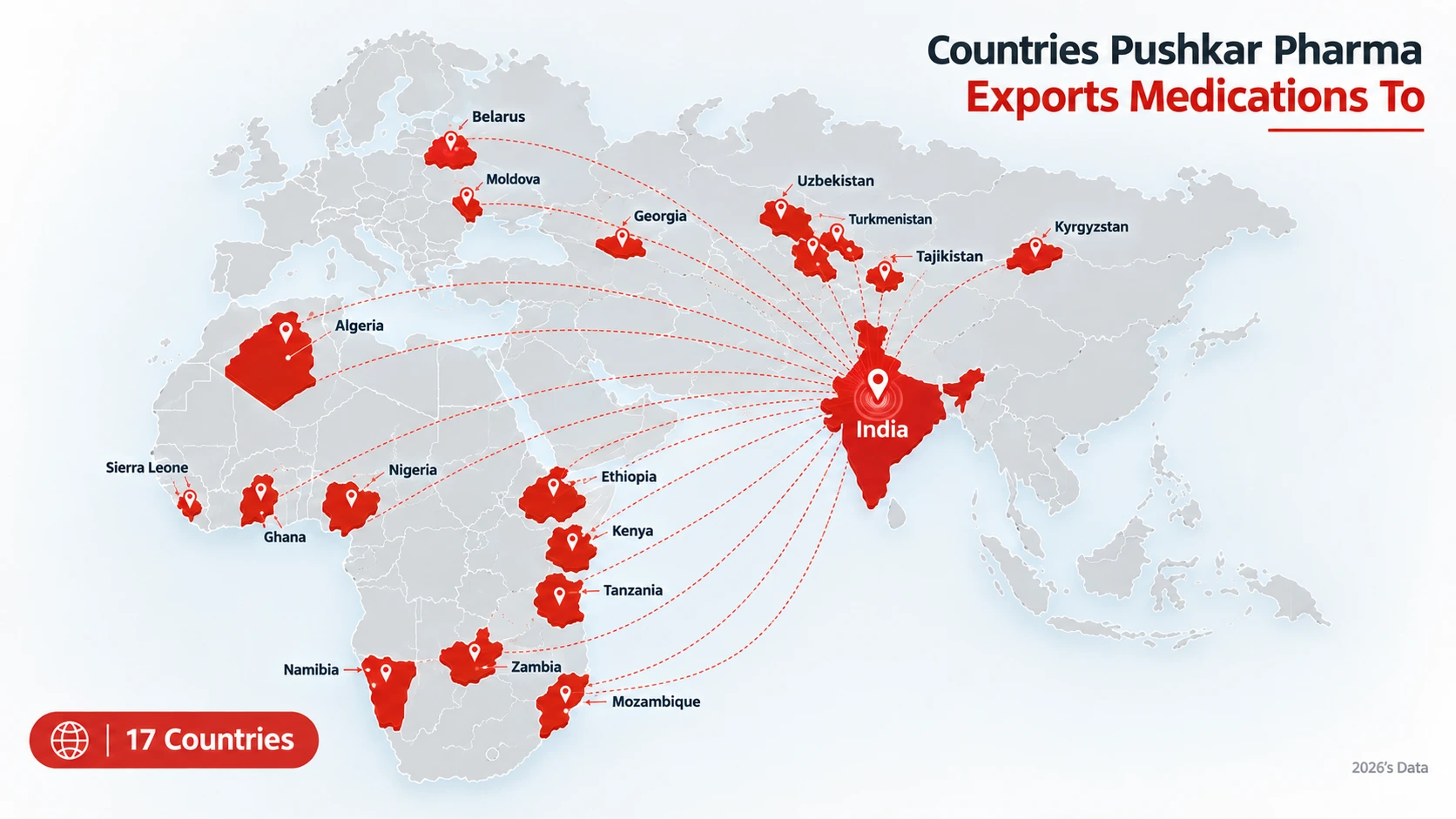
Which Countries Does Pushkar Pharma Export Injectables To?

Countries Pushkar Pharma Export Injectables To

Pushkar Pharma is a WHO-GMP certified pharma manufacturer and exporter supplying injectables, ophthalmic formulations, and general pharmaceuticals to distributors and government tenders across Africa, Central Asia, and Eastern Europe.

Region Country Export Focus
Africa Algeria Pharma manufacturer for distributors and tenders
Ethiopia Medicine exporter, EFDA-ready
Ghana Pharmaceutical manufacturer, Ghana FDA-aligned
Kenya Injection manufacturer, PPB-registered cold-chain
Mozambique Pharma exporter to distribution networks
Nigeria Medicine manufacturer, NAFDAC-ready
Namibia Injectable manufacturer, NMRC-aligned
Sierra Leone Pharma exporter, Pharmacy Board registered
Tanzania Medicine exporter, TMDA-approved
Zambia Pharma manufacturer, ZAMRA-registered cold-chain
Central Asia Uzbekistan Pharma exporter for distribution and tenders
Turkmenistan Injectable manufacturer, national dossier-ready
Kyrgyzstan Medicine manufacturer serving local distributors
Tajikistan Pharma exporter with registration dossiers
Eastern Europe Georgia Pharma manufacturer, regulatory agency-aligned
Moldova Medicine exporter, AMDM-registered
Belarus Pharma manufacturer for national registration

*Actively expanding registration into these markets.

Every destination gets local product registration support, batch-level quality testing, and packaging adapted to regional language and regulatory requirements.

The Bottom Line

Choosing the right pharma exporters and medicine exporters comes down to three things: certified manufacturing you can verify, pricing you can plan around, and a regulatory team that gets your product cleared without delays. Pushkar Pharma delivers all three — WHO-GMP certified production, transparent batch pricing, and dossiers built for 17 countries across Africa, Central Asia, and Eastern Europe.

Whether you’re placing a first pilot order or scaling an existing supply relationship, working with an established pharma manufacturer means fewer surprises at every stage — from formulation to customs clearance.

Ready to move forward?

Request a quote or download our product catalogue to see full specifications and pricing for your target market.

Frequently Asked Questions

Why should you choose a bulk pharma exporter in India?

India can offer cost-effective manufacturing, WHO-GMP certified facilities, & large chemical synthesis capabilities. Thus, international buyers can reduce their operational expenses significantly.

How do the exporters manage temperature-sensitive medicines?

The exporters use the validated cold-chain containers with real-time temperature loggers. As a consequence, the heat-sensitive formulations stay completely potent during the international shipment.

What is the initial order value for export batches?

The commercial export batches usually start around ₹1.5 lakh based on product type. Moreover, the flexible conditions permit the importers to increase their inventories gradually.

Does Pushkar Pharma provide private label contract manufacturing?

Yes, Pushkar Pharma can design the custom packaging and handle the specialized brand labeling. Thus, the clients establish branded product presence in target markets effortlessly.

What quality control measures apply to exported raw materials?

The raw materials undergo HPLC testing, microbial limit tests, and assay checks. Thus, only the verified active ingredients enter the final formulation stage.

How long does custom formulation manufacturing take?

The standard production cycle takes about 30-45 days after the design approval. Thus, the batch planning stays predictable for the international sales team.

What payment terms apply to large export orders?

The exporters offer advance telegraphic transfers or irrevocable Letters of Credit. Thus, the financial transaction stays safe and transparent for both trading parties.

Why is WHO-GMP certification important for global trade?

The WHO-GMP certification ensures that the products comply with international safety and hygiene standards. Consequently, the regulatory authorities authorize market entry much faster.

Best WHO-GMP Certified Eye Ointment Manufacturing Company - Pushkar Pharma

Best Eye Ointment Manufacturers in India | WHO-GMP Certified Eye Ointment Manufacturing Company

Pushkar Pharma is a WHO-GMP and ISO 9001:2008 certified eye ointment manufacturer based in Kala-Amb, Himachal Pradesh, operating a 7,000+ sq. yard facility with ISO Class 5 sterile filling rooms.

The company manufactures ophthalmic ointments including antibiotic (Moxifloxacin, Tobramycin), anti-inflammatory, and steroid-combination (Hydrocortisone) formulations for third-party and private-label contract manufacturing. Every batch undergoes sterility testing (membrane filtration, 14-day incubation), HPLC-based active concentration testing (95–105% of specified API), and particle size analysis (below 50 microns). Third-party manufacturing batches start at ₹1.5–5 lakh depending on API, packaging, and volume, with a minimum order of 3,000–5,000 tubes and a 30–45 day production cycle.

Why Should You Partner with Eye Ointment Manufacturers in India?

High-Purity Sterile Formulations

Sterile eye ointment manufacturing requires ISO Class 5 filling environments with automatic filling lines, since particulate contamination above pharmacopeial limits (typically 50 microns) can cause ocular irritation. This is why particle size testing via laser diffraction or microscopic analysis is a standard release check before any batch ships.

Wide Range of Formulated Ophthalmics

Ophthalmic ointment manufacturers typically offer five core categories: antibiotic, anti-inflammatory, lubricating, antiviral, and steroid-combination ointments. A manufacturer covering all five in one facility lets a brand consolidate its full eye-care line with a single contract partner instead of splitting production across vendors.

Low Cost of Third-Party Production Model

Third-party manufacturing removes the need to build and license your own sterile facility, which for ophthalmic products can run into crores in capital cost. Brands instead pay per batch — commonly ₹1.5–5 lakh depending on API, packaging, and volume — and redirect the capital they’d have spent on infrastructure into marketing and distribution.

Multi-Stage Batch Verification

Batch verification for ophthalmic ointments runs at three checkpoints: raw material testing before production, in-process sterility and HPLC concentration checks during filling, and a final release test covering seal integrity via vacuum leak detection. Leak-free sealing is critical because a compromised seal can void sterility even if the formulation itself passed earlier tests.

Regulatory Export Compliance

Exporting ophthalmic ointments requires WHO-GMP certification at minimum, plus a Certificate of Analysis (COA) and HPLC test data for each batch, since importing countries generally won’t clear pharmaceutical shipments without documented proof of sterility and API concentration.

How Do Eye Ointment Manufacturers Ensure Product Quality and Safety?

Eye ointment quality is verified through five checks before a batch is released: sterility (membrane filtration, no microbial growth after 14 days), active concentration (HPLC, 95–105% of specified API), particle size (below 50 microns), seal integrity (vacuum leak test), and metallic particulate limits (max 50 particles across 10 sample tubes).

Quality Control Parameter Testing Method & Equipment Standard Acceptance Criteria
Sterility Membrane filtration method No microbial growth after 14 days of incubation
Active Concentration HPLC analysis 95.0%–105.0% of the specified API concentration
Particle Size Analysis Microscopic analysis / laser diffraction Solid particles controlled below 50 microns to minimize eye irritation
Seal Integrity Test Vacuum leak detection Leak-free seal performance under negative pressure
Metallic Particulate Limits Pharmacopeial ophthalmic inspection Maximum 50 metal particles across 10 sample tubes

What Factors Must Be Taken into Account While Choosing the Eye Ointment Manufacturers in India?

Choosing an eye ointment contract manufacturer comes down to five checks: verified WHO-GMP, ISO 9001:2008, and state drug license status; an ISO Class 5 sterile filling room; enough production capacity to cover peak demand; batch-level COA and HPLC data on request; and tamper-evident packaging such as aluminum or lami-tubes.

  • Validate the validity of WHO-GMP, ISO 9001:2008 & state drug manufacturing license.
  • Ensure that there is a modern ISO Class 5 filling room at the facility for sterile filling during ophthalmic ointment manufacturing.
  • Ensure the output capability of the factory to avoid supply limitations during peak periods of demand.
  • Request COA and HPLC test results for every single batch.
  • Ask about the type of packaging used by the partner, such as tamper-evident aluminum tubes or lami-tubes.

By collaborating with accredited eye ointment manufacturers, you will guarantee compliance with national pharmacopeial standards. Hence, pharmaceutical companies avoid quality variations and build up credibility in the market.

Why Is It Important to Collaborate with Pushkar Pharma as Your Eye Ointment Manufacturer?

Experienced Pharmaceutical Manufacturing Company

We offer extensive experience in sterile pharmaceutical manufacturing. Also, the qualified technical staff ensures that all the batches are consistent in every product line.

State-of-the-art Kala-Amb Factory

Pushkar Pharma manufactures eye ointments at a 7,000+ sq. yard facility in Kala-Amb, Himachal Pradesh, with dedicated ISO Class 5 sterile filling rooms for ophthalmic production.

Broad Portfolio of Available Formulations

Pushkar Pharma manufactures Moxifloxacin, Tobramycin, and Hydrocortisone eye ointments, covering antibiotic, antibiotic-combination, and steroid categories for third-party and private-label partners.

Affordable Third-Party Contract Price

Third-party manufacturing packages start from ₹1.5 lakh per batch, scaling with API, packaging, and order volume — giving smaller brands a lower entry cost than building an in-house sterile facility.

Reliable Nationwide Logistics System

With a great record of prompt deliveries, Pushkar Pharma provides fast product delivery all over the country. Moreover, due to the effective logistics chain, partners never run out of the product.

Conclusion

Choosing reliable eye ointment manufacturers is an essential part of establishing an efficient ophthalmic brand. The Pushkar Pharma ophthalmic ointment manufacturing firm is a leader among eye ointment producers with WHO-GMP certification and analytical testing.

Frequently Asked Questions

1. What is the average manufacturing cycle of eye ointments?

The typical third-party eye ointment manufacturing cycle takes 30–45 days, covering formulation, sterile filling, batch testing, and packaging.

2. What is the minimum order quantity of Contract Manufacturing?

Minimum order quantity for third-party eye ointment manufacturing usually starts at 3,000–5,000 tubes per batch, though this can vary by formulation and packaging type.

3. Why is ophthalmic ointment utilized instead of eye drop solution?

Advantages of ophthalmic ointments are long-lasting ocular retention, high drug bioavailability, and reduced frequency of doses compared to eye drops.

4. What quality certificates are there with Pushkar Pharma?

We holds WHO-GMP, ISO 9001:2008, GLP and state licenses for drug manufacturing.

5. How is sterility of ophthalmic ointments achieved?

Ophthalmic ointments are packed in tamper-proof aluminum tubes or multi-layered lami-tubes.

6. Does Pushkar Pharma provide formulations for private labels?

Yes, we supplies formulations customization, private labeling and packaging design for businesses and franchises.

7. How is metal particles presence in ophthalmic ointments detected?

Technicians melt the sample base and examine it under a microscope to confirm no metallic particles exceed pharmacopeial limits.

8. What is the shelf life of ophthalmic ointments?

Sterile ophthalmic ointments shelf life is 24 months in storage conditions below 25°C.

9. Does Pushkar Pharma provide assistance in export documentation of eye care products?

Yes, we provides complete set of regulatory documents, Certificates of Analysis (COA) and logistic support.

What is Third-Party Manufacturing in Pharma? Top 10 WHO-GMP Certified third-party manufacturing Companies, Process & Advantages (2026 Guide)

What is Third-Party Manufacturing in Pharma? Top 10 Companies, Process & Advantages (2026 Guide)

India’s pharmaceutical sector has become one of the fastest-growing manufacturing hubs in the world, with the domestic market valued at around Rs. 5,20,000 crore (US$ 60.32 billion) in 2026, projected to grow to Rs. 6,89,000 crore (US$ 79.74 billion) by 2031. A major driver behind this growth is outsourced production: the contract manufacturing segment held a 53.2% share of the market in 2023 and continues to grow as more companies shift toward external manufacturing partners, rather than building their own plants. Grand View Research. (Source – Big Adda)

This shift has made third-party manufacturing one of the most accessible ways to enter the pharma business in 2026 — whether you’re a startup, a PCD franchise business, or an established brand looking to expand your product range without capital-heavy infrastructure. This guide breaks down exactly how third-party manufacturing works in India: the process, the top WHO-GMP certified companies, the PCD franchise model, and what to evaluate before choosing a manufacturing partner.

What is Third-Party Manufacturing in Pharma?

Third-party manufacturing in pharma is when a brand owner outsources drug production to a licensed, WHO-GMP certified manufacturer, then sells the finished medicines under its own brand name. The manufacturer owns the factory, raw materials, production process, and quality testing; the brand owner handles branding, marketing, and distribution. For example, a company selling “ABC Pharma” tablets doesn’t operate a plant — a certified third-party manufacturer produces, tests, and packs the tablets under the ABC Pharma label instead of its own. This model is widely used in India’s pharmaceutical sector as of 2026 to launch new brands without factory investment.

List of Top 10 Pharmaceutical Third Party Manufacturing Companies in India

Pushkar Pharma

Pushkar Pharma produces premium-grade pharmaceutical products across various dosage forms. Their product list consists of anti-infective tablets, pediatric suspensions, and GI disorders capsules. What is also important – Pushkar Pharma facilities are ISO and WHO-GMP certified. Their key advantages are cost-effective net rates, fast batch delivery in 48 hours, accuracy of formula production and flexibility in setting minimum quantities.

Akums Drugs & Pharmaceuticals Ltd.

Akums Drugs & Pharmaceuticals represent one of the largest third party manufacturing pharma companies in India. Akums produce vast ranges of formulations including softgel capsules, oral liquids, tablets, and dry powder injections. Akums run several WHO-GMP and USFDA compliant facilities. The strengths of the company involve rapid manufacture on a mass scale, sophisticated research abilities, regulatory document support, and constant quality of batch productions.

Sun Pharmaceutical Industries Ltd.

Sun Pharmaceutical Industries represents the best option among top 10 pharmaceutical third party manufacturing companies in India that has wide manufacturing capacities across various fields of treatment. Their formula list includes chronic cardiology formulas, neurology tablets, oncology injectables, and respiratory products. The company’s production plants possess WHO-GMP and USFDA certifications. Their main strengths include world class formula production, testing process, constant stock supply, and international regulatory compliance.

Dr. Reddy’s Laboratories

Dr. Reddy’s Laboratories manufactures unique pharmaceutical manufacturing for complex generics and active ingredients. They have a great formula list that includes cardiovascular capsules, gastro-intestinal disorders suspensions, antidiabetic treatments and biological formulas. Dr. Reddy’s Laboratories operate facilities with WHO-GMP certificates. Their key strengths include high-quality analytical testing laboratories, formula purity, sustainable production techniques, and global distribution channels.

Cipla Ltd.

Cipla stands for production of latest generation respiratory, anti-asthmatic and critical care pharmaceutical products. Plus, Cipla manufacture metered dose inhalers, respules, antiretroviral tablets, and topical ointments. Cipla’s manufacturing facilities run strictly under the regulations of WHO-GMP and international regulatory bodies. Cipla’s key strengths involve innovative inhalation technology development, quality assurance measures, large batch production, and high level of clinical trust in domestic market.

Lupin Ltd.

Lupin specializes in anti-tuberculosis medicines, cardiovascular tablets & cephalosporin products. Their manufacturing range comprises oral solids, liquid suspensions, and sterile injectables. Lupin’s manufacturing units comply with international and WHO-GMP certificates. Lupin’s main strengths are involved in advanced research facilities for formulas, large production efficiency, strict raw materials procurement, and regulatory compliance expertise for global markets.

Aurobindo Pharma

Aurobindo Pharma specializes in high-volume production of API and formulated dosages. The range includes beta-lactam antibiotics, dietary supplements, and CNS treatments. Aurobindo’s production plants hold WHO-GMP certificates. Key strengths of the company include integrated manufacturing ecosystem, cost leadership, rapid product development, and large warehousing capacity.

Zydus Lifesciences

Zydus Lifesciences manufacture vaccines, biosimilars, gastrointestinal liquid preparations, and pain management tablets. Their production plants hold WHO-GMP and ISO certificates. The strengths of Zydus Lifesciences involve biotechnology research, strong quality management systems, broad range of therapeutics, and reliable contractual delivery times for business partners.

Torrent Pharmaceuticals

Torrent Pharmaceuticals focuses primarily on niche therapeutic segments including cardiovascular, CNS and Gastro-metabolic formulas. They manufacture sustained-release tablets and pediatric syrups. They have WHO-GMP accredited manufacturing facilities. Their strengths are involved in precise dose manufacturing, rigidity of laboratory safety checks, customer support and consistent packaging.

Alkem Laboratories

Alkem Laboratories produce a wide range of anti-infectives, nutraceuticals, analgesics, and dermatological formulations. Alkem’s production facilities hold WHO-GMP, ISO and international quality certificates. Main operational strengths of the company include massive annual production capacity, nationwide logistics network, competitive trade pricing, and high brand recognition among business partners.

How Does Third-Party Pharmaceutical Manufacturing Function in India?

To clearly graspthird party manufacturing in pharma, it will be useful to find out how outsourcers fulfill orders from beginning till completion of the project. This is done through reliable third party manufacturing pharma companies:

Operational Stage Activity Expected Timeline Responsibilities
1. Product Selection & Quotation Finalize the product list, batch quantities, artwork requirements, and trade pricing. 2–4 Days The brand owner selects formulations and batch quantities; the manufacturer provides pricing.
2. Documentation & Verification Submit the required drug license, GST details, and approved brand-name information. 3–5 Days The brand owner provides the documents; the manufacturer reviews and verifies them.
3. Artwork & Packaging Approval Prepare foil, box, and label designs with accurate product and batch details. 5–7 Days The designer prepares the artwork; the brand owner reviews and approves the content.
4. Raw Material Procurement & Manufacturing Procure required raw materials, conduct quality checks, and begin batch manufacturing. 10–15 Days The manufacturer sources approved raw materials and produces the batch according to specifications.
5. Quality Control & Delivery Complete quality testing, verify batch specifications, prepare documentation, and arrange dispatch. 7–10 Days The manufacturer completes quality checks, issues the COA where applicable, and dispatches the finished batch.

What Are the Advantages and Factors to Consider in Pharmaceutical Third Party Manufacturing?

Cost-Effective Production Model

By understanding what is third party manufacturing in pharma, entrepreneurs understand that this production method excludes any capital expenditures on construction of land, machines & salaries for workers. In that way, business entities manage to save millions of dollars while obtaining high-grade formulations at competitive trade prices.

Access to Certified Manufacturing Facilities

Another advantage of working with pharmaceutical third party manufacturing partners is that they ensure the production in WHO-GMP and ISO certified facilities. As a result, entrepreneurs get products with high dosage accuracy, pure formulation and freedom from any contamination during the manufacturing process.

Focus on Expansion of Marketing Activities

Furthermore, by choosing reliable third party manufacturing companies of India you will manage to free the whole management team from unnecessary responsibilities. This will allow you to allocate all your funds for promotion and distribution activities.

Broader Portfolio of Formulations Available

When choosing third party manufacturing companies for pharmaceutical formulas you immediately obtain access to broad portfolios including many dosage forms: tablets, capsules, injections, suspensions, and so forth. This will help to diversify your product range rapidly and efficiently.

Flexible Batch Orders Quantities

As part of evaluating what is third party manufacturing in pharma, one may notice that contract partners provide the opportunity of placing relatively small orders of batch orders. Thus, startup businesses will be able to launch products without any risk and scale production later on increasing demand.

Conclusion

Outsourcing of the manufacturing is the most effective and efficient way of doing business for all modern healthcare companies in India. By understanding what is third party manufacturing in pharma entrepreneurs have an opportunity to launch high-quality products without heavy investments in factories. The choice of reliable partner will include the analysis of WHO-GMP certificates, open pricing and fast stock delivery.

Frequently Asked Questions

What is the distinction between third-party manufacturing & contract manufacturing?

The former involves smaller batch sizes and formulations already in place, whereas the latter often includes custom manufacturing over bigger scales for a long time.

What documents are needed to start third-party manufacturing in India?

These include drug license (DL) number, GST number, non-resemble certificate, and approved brand names.

Why should small pharmaceutical startups use outsourced production?

This significantly reduces initial entry barriers by getting rid of the cost of setting up the factory itself; thus, all efforts can be devoted to marketing and distribution of products.

What is the lead time for the very first batch order?

The first batch usually takes 30 to 45 days because of packaging design approvals, while other orders can be delivered within 20-30 days.

Does third-party manufacturing imply independent laboratory testing?

Yes, the manufacturers make very detailed raw materials testing and issue a Certificate of Analysis for each finished batch.

Is there an option of customizing the formulation ingredients for third-party manufacturing?

Yes, usually, the vast majority of certified manufacturers provides such service as long as the combination of ingredients is DCGI-approved.

Eye Drop Manufacturing Process: WHO-GMP Steps and process & Standards

Eye Drop Manufacturing Process: A WHO-GMP Step-by-Step Process Guide

How accurately are sterile liquid medicines manufactured in vision care? The contemporary ophthalmic manufacturing process entails extreme scientific exactitude and constant environmental testing for consumer protection purposes. Contemporary pharmaceutical enterprises comply with worldwide standards so that there are no microscopic contaminants in production. Thus, all of the formulations undergo rigorous heating and filtering procedures prior to entry into the cleanroom. High-efficiency air filters constantly renew the inner atmosphere, while automated equipment provides precise measurements of chemical amounts.

All of the batches have to meet extreme regulatory requirements before leaving the factory premises. Absolute quality assurance is crucial to prevent harm to the sensitive eye tissues of people. Therefore, ophthalmic manufacturing process facilities spend money constantly on specialized robotic and aseptic packages . This will make the products pure, prolong their shelf-life time, and supply them safely through nationwide channels of distribution.

What are WHO-GMP eye drop manufacturing Standards?

The WHO-GMP eye drop manufacturing scheme presupposes absolute sterile controls of all the operations performed by the personnel. Advanced HEPA filters are used to maintain cleanroom conditions.

  • Cleanrooms guarantee complete prevention of airborne contamination.
  • Facility workers wear sterilized protective clothes daily.
  • Pressure differential helps to secure sensitive areas.
  • The equipment undergoes automated steam sterilization cycles.
  • The water system utilizes reverse osmosis-type purification.

Guidelines guarantee product safety at an extremely high level.

How Are Raw Materials Used in the Ophthalmic Manufacturing Process?

Material Type Preparation Method Quality Control Procedure
Active substances Precise electronic weighing Purity assay test
Excipients & Buffers Dissolving in WFI water pH level test
Container bottles Blow-fill-seal method Leak and defect scanning
Dropper tips Automated ultraviolet lamp illumination Sterility test

How Are Sterilization, Filling, and Packaging Carried Out in the Eye Drops Production Line Process?

One question arises in every pharma firm that “how eye drops are manufactured”. Here is the complete process of the eye drops production line process.

Room Sterilization

The cleanroom areas get regular, rigorous chemical fumigation. Ultraviolet lights disinfect all surfaces daily. Therefore, there is virtually zero concentration of microorganisms. Workers monitor levels of air particles continuously. Such procedures guarantee absolute aseptic conditions.

Aseptic Filling

Automated nozzles disperse precise amounts of the liquid. Sterile bottles travel along enclosed conveyor belts. Human contact is completely excluded. All units get sealed instantly after being filled. This helps to prevent any exposure to the environment.

Sealing Procedure

Capping machines install tightly sealed tamper-proof closures. Such sealing prevents any potential leakage of sterile liquids. Operators check the torque values of closures continuously. Thus, the risk of such problems decreases considerably.

Quality Control

The laboratories conduct a thorough examination of the samples randomly picked from all production batches. The technicians test them for the presence of any particulates. Tests of microbiology confirm complete sterility of all samples. Therefore, defective products do not reach markets.

Final Packaging

Bottles go into protective outer cartons. There are printed all batch numbers on the boxes. People pack products into strong boxes for transportation. Thus, damage during transport is completely excluded. Logistics teams distribute the batches safely nationwide.

How Does Pushkar Pharma Make Sure about Quality During Sterile Eye Drops Manufacturing?

Pushkar Pharma keeps very high quality standards in all its ophthalmic manufacturing processes. Contemporary infrastructure ensures high effectiveness and safety. Thus, people rely on such advanced formulations.

  • Advanced machinery provides precise dosing accuracy.
  • Laboratories perform thorough stability tests in-house.
  • The experienced microbiologists monitor all of the cleanroom rooms.
  • Raw materials undergo strict chemical analyses.
  • Ethical corporate policy regulates all business dealings.
  • The strict tests guarantee optimal outcomes for patients.

Frequently Asked Questions

What is the common cost of creating an ophthalmic factory in India?

Setting up a certified facility involves expenses of 5 to 15 crore rupees.

Why is water for injection important for production?

The water for injection should be ultrapure because ordinary water is full of minerals and microbes and can cause serious eye infections.

How do producers prevent any microbial growth without using harmful preservatives?

Facilities use either single-dose unit containers or advanced preservative-free filtration systems to ensure sterility.

What is the usual temperature range inside cleanrooms?

Cleanrooms have strict climatic control with a temperature range of 20 to 22 degrees centigrade and 45 percent relative humidity.

What is the term for a typical stability test?

Accelerated stability tests are conducted for 6 months, while real-time testing goes on through the entire product shelf life term of 2 years.

What is the role of HEPA filters in sterile spaces?

High-efficiency particulate air filters extract 99.97% of air particles to ensure clean airflow over the open filling spaces.

Are third-party manufacturing services cost-effective?

The third-party manufacturing model saves around 40 to 60 lakh rupees in initial infrastructure costs.

What regulatory documents are needed to introduce a new brand?

Brands require a drug license, GST registration, WHO-GMP certification certificate and approved formulations.

How do ophthalmic suspensions differ from solutions?

The suspensions consist of non-dissolved drug particles that require gentle shaking before use, while solutions are clear liquids.

Why should one use the services of Pushkar Pharma?

Pushkar Pharma has unmatched industry expertise and a WHO-GMP-certified facility at very competitive prices starting from 50 rupees per piece.

The Bottom Line

Knowledge of the peculiarities of the ophthalmic manufacturing process reveals the strict accuracy involved in producing safe vision care solutions. From the raw material tests to aseptic packaging, each step has to meet all of the international quality standards in order to secure patient safety. With the use of modern technology, automated handling, and cleanroom conditions, manufacturers minimize risk and increase production output. For businesses looking for reliable contract manufacturing services, certified producers like Pushkar Pharma guarantee full compliance and successful distribution of the product.

Top Injection Manufacturing Companies in India 2026 Based List

Top 10 Injection Manufacturing Companies in India (2026 Based List)

India’s top injection manufacturing companies are WHO-GMP and ISO-certified pharmaceutical manufacturers producing sterile liquid injections, vaccines, and hospital formulations for domestic hospitals and export markets. India’s injectable pharmaceutical market is valued at over ₹1,50,000 crore, one of the largest such markets globally. Companies entering the injectables segment typically partner with a certified third-party manufacturer to reach market faster without building their own sterile facility.

This list ranks India’s top injection manufacturing companies by manufacturing scale, certification level (WHO-GMP, US-FDA, EU-GMP), and product-range breadth across antibiotics, oncology drugs, vaccines, and hospital IV formulations.

List of Top 10 Injection Manufacturing Companies in India

India’s top 10 injection manufacturing companies in 2026 are Pushkar Pharma, Farbe Firma, Cipla, Sun Pharmaceutical Industries, Lupin, Zydus Cadila, Bharat Biotech International, Serum Institute of India, Gland Pharma, and Fresenius Kabi India. Each holds WHO-GMP certification and manufactures sterile injectables — ranging from antibiotics and oncology drugs to vaccines and hospital IV fluids — for hospitals and distributors across India and export markets. Full profiles, product ranges, and certifications for each company follow below.

1. Pushkar Pharma

Pushkar Pharma offers premium third-party manufacturing services for a wide range of critical care and general injectables.

Product Range: Antibiotics, analgesics, and emergency life-saving liquid medications.

Accreditations: WHO-GMP and ISO certified manufacturing units.

Strengths: Internal supply chain, competitive pricing, and quality testing.

2. Farbe Firma Pvt. Ltd.

Farbe Firma Pvt. Ltd. is famous for its innovative sterile liquid products and its ability to prevent any contamination while producing every batch.

Product Range: Dry powder injection, liquid ampoules, and multivitamin vials.

Accreditation: ISO certified manufacturing facilities, WHO-GMP & GLP.

Strengths: R&D centers, custom packaging, and nationwide distribution network.

3. Cipla Ltd

Cipla Ltd. is unique among other companies manufacturing injections because of the company’s past experience in dealing with respiratory and critical care treatment.

Product Range: Injectable cancer drugs, anti-infective drugs, and complex critical care medicines.

Certifications: FDA (US), GMP (WHO, EU).

Strengths: Global reach, large yearly turnover in excess of ₹20,000 crores, biotechnology facility.

4. Sun Pharmaceutical Industries

Sun Pharmaceutical Industries is the world leader in the pharmaceutical industry, using innovative automated technologies for supplying special injectable products around the globe & in more than 100 countries.

Product Range: Complex generics, peptides, cytotoxic oncology drugs, and cardiovascular therapeutics.

Accreditations: Plants approved by the US-FDA, global quality compliance.

Strengths: R&D investments, high production capacity, sterile processing units.

5. Lupin Limited

Lupin Limited is considered one of the leading manufacturers of injectables in India which provides highly reliable supplies of therapeutics. This company produces only quality-guaranteed injectables that cater to the demands of hospitals worldwide.

Product range: Cephalosporins, anti-tuberculosis injectables,, and hospital specialty medicines.

Certifications: WHO-GMP, UK-MHRA, US-FDA.

Strengths: Export potential, drug delivery system innovations and strong clinical safety standards.

6. Zydus Cadila

Zydus Cadila creates modern therapeutic innovations through scientific research and provides customers with specialized biologic and generic injection products in various medical areas.

Product range: Vaccines, biosimilars, gastrointestinal injectables and drugs for acute pain treatment.

Certifications: WHO-GMP and other international standards.

Strengths: Biotechnology research centers, large production sites and diverse product range.

7. Bharat Biotech International

Bharat Biotech International specializes in immunological innovations that produce life-saving vaccines and therapeutics in order to secure the health of people all over the world.

Product range: Viral vaccines, recombinant medicines and sterile vaccines.

Certifications: WHO pre-qualified high-containment labs with GMP standards.

Strengths: Innovations in viral research, partnerships in global health and mass production.

8. Serum Institute of India

Serum Institute of India operates as one of the best injectable manufacturers in India of vaccines, constantly providing its customers with affordable & life-saving biological injectables for international distribution.

Product Range: Pediatric vaccines, anti-sera, hormone injections and biological therapeutics.

Accreditations: WHO certification of plants and global supervision.

Strengths: Efficiency in mass production, global presence, and low prices of vaccines.

9. Gland Pharma Limited

Gland Pharma Limited produces only sterile injectables based on innovations like pre-filled syringes & lyophilized vials for institutional clients.

Product Range: Heparin, anticoagulants, oncology sterile preparations,, and special hospital medicines.

Accreditations: US-FDA, WHO-GMP, EU-GMP compliance.

Strengths: Specialized contract manufacturing services, zero-defect quality policies, and scalability of production capacity.

10. Fresenius Kabi India

The main focus area of Fresenius Kabi India is innovations related to clinical nutrition, fluid therapy and infusion techniques used in critical hospital environments.

Products offered: IV Fluids, Blood Volume Expander, Clinical Nutrition Products and Emergency Drugs.

Accreditations: WHO-GMP and ISO 9001 Certified Manufacturing Plants.

Strengths: Precision German Engineering, Hospital-Specific Services & Logistics Services.

Which Factors Should You Consider Before Choosing an Injection Manufacturing Company in India?

Evaluation Parameter Key Operational Focus Strategic Business Benefit
Regulatory Compliance WHO-GMP & USFDA Compliance Ensures regulatory approval, product quality, and acceptance in domestic and global markets.
Infrastructure Automated Cleanrooms & Sterile Vial Filling Lines Reduces contamination risks and ensures consistent sterile manufacturing.
Capital Investment ₹10 Lakhs – ₹50 Lakhs (Typical Setup) Helps estimate the investment required to establish a manufacturing facility.
Product Portfolio Multiple Therapeutic Categories Expands market reach across hospitals, clinics, and retail pharmacies.

What Makes the Top Injection Manufacturing Companies in India Stand Out in the Pharmaceutical Industry?

  • Innovative robotic sterile filling lines do not require human contact in order to maintain absolute purity of products.
  • Comprehensive quality control laboratories conduct microbial tests of products before the commercial batch release.
  • Annual investments in R&D speed up the creation of innovative drug formulations.
  • Vast domestic and international distribution networks ensure uninterrupted supply chains for hospitals. 
  • Strict international compliance creates trust in doctors and medical professionals in the country.
  • Scalability of manufacturing capacity helps companies easily fill large government and private sector orders.
  • Transparency of the business model provides profitable partnerships with third-party pharma distributors.

Frequently Asked Questions

What does the term “top injection manufacturing companies in India” mean?

It refers to WHO-GMP or US-FDA certified pharmaceutical manufacturers operating sterile cleanroom facilities, producing injectables across multiple therapeutic categories, and passing routine third-party quality audits.

Why is it important to use sterile drugs in contemporary pharmaceutics?

They work fast and have an impact on the bloodstream immediately; that is why they are extremely valuable in emergency and critical medical conditions.

What role do regulatory certificates play in injection manufacturing quality?

A certificate from regulatory authorities such as the US FDA or WHO ensures that every batch of the product corresponds to international safety standards. 

How much capital do you need to invest in order to work with injection manufacturing companies?

The initial capital is invested in the range of ₹10 lakh to ₹50 lakh, depending on the volume of orders and distribution rights.

Which therapeutic segments are widespread among Indian manufacturers of injections?

Main segments include antibiotics, analgesics, cardiovascular treatments, oncology drugs, and essential emergency life-saving formulations.

How do third party manufacturing agreements help new pharma entrepreneurs?

Such agreements help new businessmen save money for factory setup, focusing only on the promotion and distribution of products.

What is the role of innovations in modern production plants?

They avoid microbial contamination, increase the production speed, and guarantee precise dosage formulation for all batches.

Are Indian injectable products exported to international regulated markets?

Yes, some leading companies export high-quality, affordable sterile medicines to regulated regions in America, Europe, and Africa.

What is the importance of a WHO-GMP-certified partner in the pharmaceutical business?

This certificate means that the manufacturer works according to the global standard of hygiene, equipment calibration, and employees’ safety.

How does the supply chain reliability influence pharmaceutical distribution?

Consistent delivery guarantees constant availability of necessary drugs in hospitals.

The Bottom Line

Being in a competitive environment of healthcare requires collaboration with industry leaders. Being a verified partner of top injection manufacturing companies in India like Pushkar Pharma guarantees entrepreneurial success.

How to get a drug manufacturing license in India 2026

How to get a drug manufacturing license in India in 2026?

A drug manufacturing license in India is issued by your State FDA (standard drugs) or CDSCO (new drugs, clinical trials, large facilities). To get one, you need a GMP-compliant facility, a B.Pharm graduate with 18+ months of experience on staff, and a quality control expert. Apply via Form 24 on the Sugam portal or your state FDA site with required documents (firm proof, site layout, staff certificates, NOCs). After document review and a site inspection, you receive Form 25 (or Form 28 for select drugs). The full process takes 60-90 days. Don’t want the hassle? Partner with a WHO-GMP certified manufacturer like Pushkar Pharma instead.

In India, manufacturing medicine without a valid license is a serious crime. A license means that your manufacturing plant complies with Good Manufacturing Practices (GMP), uses quality raw materials and adheres to stringent hygiene standards.

It also allows you to market, export and sell pharmaceutical formulations legally across state and international borders. Applying for a license can feel tricky at first. Thanks to a large number of forms to fill and papers to gather. However, things can get easier if you know the steps to meet drug manufacturing license eligibility. This is what we did in this very guide.

If you don’t go through the hassles of licensing, you can hire a contract manufacturer like Pushkar Pharma. Let’s get started.

2026 Drug Manufacturing License Eligibility Requirements

To get a drug manufacturing license in India in 2026, you need a GMP-compliant facility, qualified technical staff (B.Pharm with 18+ months experience), and a quality control expert on-site. Apply via Form 24 through the Sugam portal or your state FDA portal, submit required documents, pass document review and site inspection, then receive Form 25 (or Form 28 for Schedule C/C1 drugs). The process takes 60-90 days.

There are some criteria that applicants must meet before applying, such as space, technical expertise, and equipment.

Some of the key Considerations for drug manufacturing license eligibility

1. Qualified Technical Staff:

Your unit should have qualified staff on a full-time basis to qualify for a drug manufacturing license. You will need a graduate in pharmacy (B.Pharm) with a minimum of 18 months of practical experience in drug manufacturing. It is a basic yet important step to get your medicine manufacturing license.

2. Quality Control Expert:

One of the major requirements for drug manufacturing license eligibility is to involve a qualified testing analyst who has a degree in Pharmacy, Chemistry or Microbiology and relevant laboratory testing experience.

3. Space and layout:

Ensure you have enough space for your drugs. But keep in mind that the space should be created according to the type of drugs.

4. Compliance with GMP (Revised Schedule M):

Your facility layout, ventilation and sanitation systems should be compliant with revised GMP standards.

All the drug manufacturing licenses meet the eligibility criteria, so there is no problem in getting approval during the official site inspection.

Types of Drug Manufacturing Licenses in India

As per your business model, there are various types of licenses you can apply for:

• Formulation Manufacturing License:

This is needed for manufacturing finished goods such as tablets, syrups or ointments.

• Bulk Drug (API) License:

This is needed to manufacture Active Pharmaceutical Ingredients that are used as the base materials in medicines.

• Loan License:

If you want to manufacture medicines using the equipment and premises of another licensed manufacturer, then this license is issued.

• Repackaging License:

It is required to repackage drugs from bulk containers into retail packs. It is a key important drug manufacturing license eligibility.

CDSCO vs. State FDA approval: What’s the Difference?

Knowing the difference helps you file your application with the right regulatory authority.

State Licensing Authority (State FDA/SLA):

State-level manufacturing licenses for standard formulations, bulk drugs and routine site inspections.

CDSCO (Central Drugs Standard Control Organisation):

CDSCO gives approvals for new drugs, clinical trials, imported drugs and large-scale manufacturing facilities.

For most routine pharmaceuticals, your main interface would be with the State FDA. But for new molecules or new formulations, you need clearance from the central CDSCO.

Documents Required for a Drug Manufacturing License

Here is the list of important documents for drug manufacturing license application in 2026:

  • Form 24 (Application for licence grant/renewal)
  • Proof of constitution of the firm (Partnership deed, MOA/AOA or Registration certificate)
  • Site plan and detailed layout of the manufacturing premises
  • Ownership documents or lease agreement for the property
  • Qualification and experience certificates of technical manufacturing and testing personnel
  • Plant machinery, equipment and laboratory testing tools list.
  • No Objection Certificate (NOC) from local municipal authorities and Pollution Control Board
  • Safety certificates (Fire NOC, etc)

To avoid administrative delays, check every item on this list of documents required for drug manufacturing license applications.

How to Apply for a Drug Manufacturing License: Step-by-Step

The process of getting a pharma manufacturing license in India is an important part of being compliant from start to end.

Step 1: Design a Facility in Compliance

Construct your plant in compliance with Revised Schedule M. Incorporate suitable cleanroom zoning, HVAC air filtration and dedicated storage for both raw materials and finished goods.

Step 2: Apply Online

Submit your application either on the Sugam portal or the online FDA portal of your state. Submit the required papers with the prescribed government fee.

Step 3: Document check

Drug inspectors check your application file. If something is needed, reply fast.

Step 4: Site Inspection

A team of Drug Inspectors (State FDA and CDSCO, as applicable) will visit your premises to test machinery, inspect sanitation and verify technical staff credentials to confirm your eligibility for a drug manufacturing license.

Step 5: License Granted

Once your plant passes, you get Form 25. Some Schedule C and C1 drugs need Form 28 instead.

Don’t Want to Go Through the License Hassle? Pushkar Pharma Can Help

Obtaining a pharmaceutical manufacturing license in India is difficult, time-consuming, costly, and requires regulatory know-how. It is easy to see why many pharmaceutical companies, distributors and entrepreneurs choose a third-party manufacturer. A third-party pharma manufacturer produces and labels medicines on behalf of their client. This way, it saves them costs and hassles associated with a drug manufacturing license.

If you are looking for such a manufacturer, Pushkar Pharma has got you covered. Pushkar Pharma is an Indian pharmaceutical company that specialises in the manufacturing of quality drugs, PCD pharma franchising, and third-party contract manufacturing services.

  • They have world-class production units with strict WHO-GMP standards.
  • It takes care of the entire end-to-end production cycle right from formulating and sourcing raw materials to regulatory compliance and packaging. I
  • If you want to start your own product line under a loan license or want to expand your production, Pushkar Pharma is the right partner for you.

To know more, please contact us at  +91-9355622444 and  +91 94661 82151.

Frequently Asked Questions

1. How long does it take to get a drug manufacturing license in India?

It can take 60 to 90 days from the date of submission.

2. What is the minimum qualification required to get a drug manufacturing license?

The manufacturing supervisor should be a B.Pharm graduate with a minimum of 18 months of experience in drug manufacturing.

3. Can I manufacture medicines with a third-party company?

Yes, you can. All you need to secure a Loan License to manufacture medicines at any existing WHO-GMP certified unit like Pushkar Pharma.

4. How long is the drug manufacturing license valid in India?

Under current rules, once you get a manufacturing license, it is yours forever as long as you pay the retention fee every 5 years.

Best Antibiotic Injection Manufacturers in India: Pushkar Pharma based in Kala Amb, Himachal Pradesh

Antibiotic Injection Manufacturers in India: Pushkar Pharma

Whether you are a distributor, a pharma brand or a healthcare facility, choosing the right antibiotic injections is crucial. An antibiotic delivers the active medicines directly into the bloodstream. Sometimes, this rapid onset of action is important in a full recovery or a life-threatening emergency. Every single drop must be pure, potent, and safe to protect patients when they are in a critical condition.

That’s why it is important to choose a reliable antibiotic injectables manufacturer in India. When it comes to reliable antibiotic injection manufacturers in India, one name that often stands out is Pushkar Pharma. Founded in 1993, the company offers a quality antibiotic injection range across the country.

In this blog, we look at why antibiotic injections matter, how to choose the right manufacturer, and how Pushkar Pharma has established itself as one of the best antibiotic injection manufacturers.

What to Look for in an Antibiotic Injectables Manufacturer

With injections, there is no room for error. A speck of dust on a tablet is usually harmless. But dirty liquid in your blood can cause real harm. This is why sterile manufacturing is one of the toughest jobs in pharma.

So what separates a good factory from an average one?

Super-Clean Rooms (Cleanrooms):

These are special rooms where the air is filtered all the time to trap dust and bacteria. Workers or professionals wear special suits, gloves, masks and hoods—so they don’t leave behind any hairs or skin cells.

WHO-GMP Certification:

This stands for the World Health Organization’s Good Manufacturing Practices. This seal of approval is only given to the safest and most disciplined factories.

Advanced Machines:

Given that injections should be 100% safe and sterile, any human contact can increase the risk of contamination. This risk is totally eliminated with robotic hands and conveyor belts in factories to fill and seal medicines into vials and ampoules.

Pushkar Pharma: Trusted Antibiotic Injectables Manufacturer in India

If you are looking for a trusted antibiotic injectables manufacturer in India, then Pushkar Pharma has got you covered with its comprehensive and high-quality product range, with 30 years of experience.

Here is why our injectable antibiotics manufacturing services are trusted by thousands of clients across the country.

Years of experience

Pushkar Pharma has been manufacturing injectables since 1993. They partner with 100+ businesses and have worked with 1,000+ happy clients! They have a team of 30 people and deal in more than 100 products.

Cutting-Edge Clean Tech

The company has state-of-the-art aseptic processing to ensure the safety of every single drop of liquid. This is a scientific method to fill and close sterile liquids in a completely germ-free environment.

Quality Control (Strict Testing)

In their factory, each batch of medicine is tested several times in special labs. The scientists check the chemical concoction and confirm that it contains no impurities and that the medicine is potent enough to fight infections effectively.

Safety Certified

Their manufacturing processes are in accordance with WHO-GMP and ISO certifications. This means their medicines are safe for people across the world, not just for patients in India.

Important Safety Information: Antibiotic Injection Side Effects

Antibiotic injections work well, but they should always be given by a trained doctor or nurse, never at home on your own. Like all medicines, they can cause side effects. For example, they may cause stomach problems as antibiotics may affect good bacteria in the gut. They may be allergic to some patients, though it happens rarely. Medical teams are trained to deal with such situations immediately. That is why these injections are usually given in a clinic or hospital.

Working Together: Third-Party and Contract Manufacturing

Not every pharma brand owns a sterile factory. This is where contract manufacturing comes in. A smaller brand partners with an established antibiotic injection manufacturing company to get their products manufactured.

Pushkar Pharma offers this kind of support to pharma companies and franchise partners who want to launch their own range of injectables and drops. This includes vials, and ampoules.

Apart from this, our batches are flexible for small and large orders.

We also provide branding and packaging support. A business looking to start an injectable line without setting up its own factory can save time and money by collaborating with an experienced antibiotic injection manufacturing company like Pushkar Pharma.

Conclusion

Making an antibiotic injection is a big responsibility. One small mistake can make it completely ineffective—even worse, harmful. That is why the standards behind an antibiotic injectable manufacturer matter so much.

Pushkar Pharma has over 30 years of experience with WHO-GMP and ISO certified facilities. It has served more than 1,000 clients.

We are known for providing safe, quality and affordable injectables across India and outside India. For more details please call us on +91 94661 82151 and +91-9355622444.

Or you can explore the top 10 injection manufacturing companies of India to be more sure before choosing.

Frequently Asked Questions (FAQs)

What is an antibiotic injectables manufacturer?

It is a pharma company, making sterile injectable antibiotics. There are strict cleanroom and quality rules that have to be followed in an effort to keep the product safe.

Why are antibiotics administered by injection and not by mouth?

They bypass the digestive system and are injected directly into the blood or muscle. This means they work faster, which is very important for very sick patients.

Is Pushkar Pharma certified?

Yes. The plant is WHO-GMP, ISO and Kosher certified. These are trusted quality marks in the pharma world.

Where is Pushkar Pharma located?

The plant is in Bhandariwala, Kheri, Kala-Amb, District Sirmaur, Himachal Pradesh.

I want to opt for your contract manufacturing services. How to contact you?

It is very simple. You can contact us at +91 94661 82151 and +91-9355622444. Or you can visit our factory located at Kala Amb. We will be glad to fulfil your needs.

What are your MOQs for injection?

Our MOQ is set according to your business goals. We don’t give a same number to everyone. We understand that our clients’ needs are unique, so should be their MOQs.

How much do you charge?

It depends on your order size.

Ear drops manufacturing company in India - Pushkar Pharma

Best Ear drops Manufacturers in India – Pushkar Pharma

Facing trouble finding highly purified liquid solutions for your pharmaceutical distributorship? For many modern business entrepreneurs in India, finding a trusted ear drops manufacturing company in India is still a tricky job. So, professional answers from specialists would definitely help resolve the problem.

By cooperating with a certified third-party ear drops manufacturing partner in India, your corporation will be able to skip the huge investment in establishing your own plant. Learn how to choose proper manufacturing partners in this professional guide.

Why Is India the Best Destination for Ear Drops Manufacturing?

The domestic market needs more special medications to treat ear infections. Therefore, corporate entities need reliable manufacturers of ear drops to be able to distribute them on the market.

  • Outsourcing your company’s production needs helps avoid investing in factory establishment.
  • More than 500 GMP-approved plants are available in India for the production of high-quality liquids.
  • Labor is relatively inexpensive in the domestic market, which helps to cut costs.
  • Various liquid types are produced by experienced manufacturers, such as antibacterial, antifungal, and earwax-melting drops.
  • Clean room technologies prevent any kind of contamination while bottling.
  • There is an excellent network of logistic providers to deliver your product to North India fast enough.
  • Your sourcing network in the country guarantees getting pure active substances for your formulas at decent commercial rates.

In general, outsourcing makes it easier to introduce complex chemical products without facing any administrative problems.

How Does a Reliable Manufacturer of Ear Drops in India Provide Safety, Sterility, and Regulation?

Maintaining Advanced Aseptic Clean Rooms

Professional manufacturing companies use a system of filters to maintain the sterility of liquids. Continuous work of air handling units guarantees that no microscopic dust gets into the filling zone.

Certificate of Analysis of Active Ingredients

Reliable manufacturers of ear drops ask for a certificate of analysis of incoming raw material. Every batch of steroids, painkillers, and antibiotics is examined for safety and sterility.

Automatic Bottles Cleaning & Filling Machines

Modern companies have fully automated bottling machines that are used for cleaning, filling, and sealing bottles. These machines make it impossible for any form of contamination through people. In turn, this makes the production process faster and ensures a consistent volume of the filled liquid.

Comprehensive Testing for Stability

Trustworthy companies place the filled ear drops in zone IV stability chambers. These devices imitate humid and hot weather conditions for several months and provide information about safety.

Heavy Metal Testing of Formulas

Professionals from an ear drops manufacturing firm in India conduct tests in order to detect any kind of metal contamination. Each solution is checked with the help of HPCL.

What Things Should You Consider Before Choosing a Reliable Partner for Manufacturing?

Evaluating technical aspects will help you make sure that your production partner can handle complex formulas. Below is a table that includes important specifications, capacities, and value-adds for your company.

Evaluation Category Important Specifications & Standards Impact & Value Add
Required Certifications WHO-GMP, ISO 9001:2008, GLP, FSSAI Legal assurance of compliance with state and central drug control regulations.
Minimum Order Quantity 2,000–5,000 pieces Allows you to test market demand with a lower initial investment.
Basic Formulations Ofloxacin, Beclomethasone, Clotrimazole, Lignocaine Covers high-demand antibiotic, anti-inflammatory, antifungal, and pain-relief formulations.
Automated Filling Sealed plastic droppers with induction caps Protects liquid formulations from air, moisture, and contamination.
Logistic Turnaround Time 25–40 days Supports a reliable supply chain and helps prevent stock shortages.

Why Should You Go With Pushkar Pharma for Ear Drops Manufacturing?

Professional Experience in the Industry

Pushkar Pharma has 30 years of professional experience in the pharmaceutical industry since its foundation in 1993. Professionals from Pushkar Pharma supervise the process of production carefully, and the company has built a reputation as a leading ENT pharmaceutical company in India, manufacturing not just ear drops but a full range of otic, nasal, and throat care formulations.

Ultra-Modern Manufacturing Unit

Pushkar Pharma works with a highly advanced manufacturing unit that is located in Kala Amb, Himachal Pradesh. It includes advanced machinery for formulating formulas.

Third Party Manufacturing

Being among the best ear drops manufacturing choices, Pushkar Pharma makes various products. They formulate custom formulas, design labels, and package products in bulk quantities.

International Quality Standards

This enterprise produces medicines with premium quality according to the rules of WHO-GMP and GLP. They provide reliable and budget-friendly pharmaceuticals for your country.

The Bottom Line

You need to find a reliable manufacturing partner to occupy the top spot in the healthcare market. By doing so, your company saves valuable capital, accesses new technologies, and maintains the sterility of liquids. Pushkar Pharma is one of the most reliable ear drops manufacturing companies that guarantees access to the manufacturing process in Kala Amb. Their engineers are responsible for formulation, bottling, and logistics. Contact these manufacturers to develop your otic product portfolio.

Frequently Asked Questions

  1. What is the price per piece for contract manufacturing?

The cost of production ranges from ₹7.50 to ₹15 per bottle, depending on the volume and active ingredients. A large quantity of bottles helps you decrease the price and increase your profit.

  1. What financial commitment should I make in order to work with a third-party manufacturer of ear drops?

Getting a custom manufacturing contract with an ear drops third-party manufacturer will require an investment of ₹1.5 to ₹5 lakhs per product line. This sum will cover costs of sourcing active substances, bottling machines, and printing.

  1. What kinds of formulas are produced in India?

The commonly used formulae are ofloxacin + clotrimazole, beclomethasone, and lignocaine hydrochloride. The formulae are used to cure complicated ear infections.

  1. How does an ear drop manufacturing company in India carry out liquid clarity tests?

Tests are carried out in laboratories on all the batches of liquids by an automated ear drops manufacturing company in India. Contamination checks are conducted before bottling.

  1. Can I receive custom packaging for my product?

Certainly, modern manufacturers offer you the customization of packaging, including a carton box with a foil design. This service will help your product stand out on the pharmacy shelf and increase the brand value.

  1. Does a manufacturer provide free samples for evaluation?

Certainly, experienced manufacturers offer you to receive free samples before production if you pay for shipping. This service allows evaluating quality of your product before starting mass production.

  1. What documents should be provided to start third-party manufacturing?

To get permission from an ear drops third-party manufacturer, your company should provide a valid Drug License (Form 25 and 28) along with a copy of GST registration. Moreover, a trademark document is required to protect your interests legally.

  1. What is the shelf life of ear drops?

Liquid otic formulas have a maximum shelf life from the date of production equal to 18 to 24 months. Storage at room temperature will help your formula stay stable for a longer period of time.

  1. Is there a preservative-free formula for contract manufacturing?

Yes, advanced plants are able to produce special single-dose units using the technology of Blow-Fill-Seal for ear drops manufacturing. Such formulas are more expensive and are bought by sensitive patients.

  1. How are wastes handled during manufacturing?

Manufacturers use an Effluent Treatment Plant to isolate any chemicals from waste fluids.

Best liquid injection manufacturer in India – Pushkar Pharma

Liquid Injection Manufacturers in India | Pushkar Pharma

Are you looking for a reliable platform to start a series of sterile injectable medicine brands without setting up an expensive plant? Setting up a personal sterile facility calls for huge budgets, which often go past 1.5 crore in recent plants. Working with a reliable production partner offers a solution to this major obstacle.

Pushkar Pharma acts as a premier liquid injection manufacturer with high-class aseptic facilities and economical batch production facilities. This veteran company has its operations from a massive manufacturing hub located in Kala Amb, Himachal Pradesh. The firm produces high-purity vials and ampoules for a variety of healthcare brands.

Through the utilization of their certified facilities, you do not have to go through the complicated compliance procedures but can just invest into distribution.

Third-Party & Contract Manufacturing of Liquid Injections

Pushkar Pharma is a preferred contract manufacturing and third-party liquid injection manufacturer for pharma brands across India and export markets. Whether you need bulk contract production or a smaller third-party manufacturing run to test a new market, our WHO-GMP and DCGI-compliant facility handles the entire process — from formulation to final DCGI documentation — so you can launch under your own brand name without owning a plant.

Why Choose Pushkar Pharma as Your Liquid Injection Manufacturer?

Choosing a professional production house helps in ensuring that the medicines you produce have maximum efficacy. Pushkar Pharma provides a full end-to-end contract manufacturing support service to ensure the smooth launch of your brand into the market.

Industry Experience: More than 33 years of experience in the pharmaceutical industry, established in 1993. As a leading liquid injection manufacturer, this company comes up with excellent industry experience.

Certifications of the highest quality: Very compliant with the new version of Schedule M and WHO GMP and ISO norms.

Infrastructure: Has a state-of-the-art manufacturing unit located in a very huge 7,000 square yards of industrial land area.

Aseptic Filling Process: Uses highly automated filling machines located in highly sophisticated ISO Class 5 clean rooms managed by the leading liquid injection manufacturer.

Production Blocks: Have separate production blocks specifically for the production of delicate hormonal injections.

Economical Manufacturing System: Provides access to the pilot batch runs at very economical manufacturing costs of Rs. 1.5 lakh.

Advantage of Being in an Excise-Free Area: Being situated in a highly advantageous excise-free area, which ensures huge cost savings for partnering brands.
In this way, pharmaceutical companies can rely on them for the manufacturing of high-quality and highly stable injections. The certification of analysis of each batch manufactured is provided by this reputable liquid injection manufacturer.

How Does Pushkar Pharma Ensure Quality, Safety, and Compliance in Liquid Injection Manufacturing?

1. Stringent Adherence to WHO-GMP & Schedule M Guidelines

The facility strictly adheres to the latest national manufacturing regulations while liquid injection manufacturing process to ensure international safety standards. In this way, this premium facility ensures that all the liquid injection batches become easily qualified for export by working with a top-tier liquid injection manufacturer.

2. Automated ISO Class 5 Cleanroom Environment

In order to prevent contamination, automatic machinery fills liquid in a highly controlled ISO Class 5/Class 100 environment. Through this technique, direct human contact with the liquid is ensured to be avoided during this important stage. There is no issue regarding sterility, backed by contract manufacturing quality controls

3. Extensive In-house Lab Testing

A team of chemists carries out extensive tests regarding sterility, bacterial endotoxins, and pH value. Through this technique, all the clients get flawless products without going through third-party lab testing delays by selecting the right liquid injection manufacturers in India.

4. Rigorous Stability Chamber Testing

The scientists place the freshly manufactured liquid samples in special environmental stability chambers to test their shelf life under varied climatic conditions. This process ensures that the injectable remains safe for a full two years under the guidance of a professional liquid injection manufacturing company.

5. DCGI Licensing and Documentation

The regulatory department prepares comprehensive product dossiers and raw material trace records. This enables the partner brands to get fast commercial approvals from the state health authorities with the support of a reliable liquid injection manufacturing company.

Why Are Healthcare Brands Selecting Pushkar Pharma for Their Liquid Injection Manufacturing Services?

Choosing a proficient manufacturing partner helps accelerate your product launch while minimizing the risks involved. The Indian healthcare market has grown immensely, making liquid injection contract manufacturing very profitable.

Monopoly Franchise Non-Exclusive Distribution
Exclusive Territory Rights Shared Territory
Reduced Internal Competition Higher Competition
Better Market Control Limited Control
Stronger Brand Positioning Fragmented Market Presence
Higher Growth Potential Moderate Growth Potential
Better Customer Retention Increased Competitive Pressure

What Types of Liquid Injections Does Pushkar Pharma Produce for Domestic and International Markets?

1. Critical Care Antibiotics Solutions

The lab manufactures highly potent beta-lactam and non-beta-lactam antibiotics under strict conditions. Such sterile liquids help healthcare professionals treat severe internal infections in patients through third-party manufacturing of liquid injections.

2. Isolated Hormonal Parenteral Formulations

Pushkar Pharma uses totally isolated air handling systems to manufacture sensitive hormonal injectables. This procedure ensures the safety and integrity of the environment when you opt for third-party manufacturing of liquid injections.

3. Highly Pure Analgesics for Pain Relief

The high-speed filling line dispenses emergency pain relief drugs with high dosage uniformity. Through this process, the hospitals can use these fast-acting analgesics for their critical patient care supplied by a premier third-party injectable manufacturing partner.

4. Premium Multi-Vitamin and Nutritional Solutions

This facility produces premium cholecalciferol, iron sucrose, and specialized vitamin B complex injectables. This helps in meeting the immense consumer market demand for preventive medical treatments.

5. Precision Ophthalmic and Specialized Droplet Formulations

Apart from conventional IV solutions, the lab produces highly pure oral liquids, ear drops, and eye drops. This helps in the diversification of the catalogs of medical businesses through the integrated liquid injection manufacturing company.

Bottom Line

Third-party outsourcing to a trusted DCGI-compliant injectable manufacturing partner becomes the most intelligent means to grow your pharmaceutical brand. We eliminate the huge costs of buying specialized sterile equipment and hiring complicated engineering staff. WHO-GMP liquid injection manufacturer, 33 years of industry presence, and low initial batch costs help build an elite production platform. By becoming the manufacturing anchor of Pushkar Pharma, you can be assured of redirecting your resources towards a marketing campaign.

Or you can Checkout the India’s top injections manufacturers list to be more sure before choosing.

Frequently Asked Questions

What is the minimum budget required to start third party liquid injection manufacturing?

The emerging brands can start their custom product manufacturing at low costs, starting from 1.5 Lakh. This helps the start-ups test their local markets without taking huge risks.

How many days are required to deliver the first batch of liquid injections?

The entire process of manufacturing finishes within 30-45 days once the formulation and design layouts are approved. This period involves raw material quarantine, automated filling, and laboratory testing.

Who Owns Intellectual Property Rights for Custom Formulated Liquid Injections?

Your company holds 100% ownership of the specific formula after clearing of the initial development costs. This provision is clearly provided in the contract manufacturing agreement.

What are the mandatory quality certificates you should verify before choosing an injection manufacturer?

You must always check the valid WHO-GMP certifications, updated Schedule M compliance, ISO 9001:2015 certifications, and active drug manufacturing licenses. Such credentials help in ensuring that the products meet safety protocols.

How Do They Maintain Precise Liquid Volumes during Large-Scale Automated Batches?

They make use of an ultra-modern microprocessor-controlled filling system that fills the liquids with high mechanical accuracy. This highly efficient system eliminates volume variations during packaging.

Can Pushkar Pharma Handle Liquid Injection Manufacturing Orders Intended for Export?

Yes, due to adherence to world-class manufacturing practices, their products get great respect in foreign markets. They efficiently export to multiple developing countries across Africa and Asia.

Why Does Outsourcing Become a Better Alternative to Private Company Operations?

By outsourcing the manufacturing of liquid injections, businesses save millions of rupees in initial brick-and-mortar investments. Consequently, they get ample funds for digital marketing.