Brands are able to bring medications to market faster by understanding the third party manufacturing process rather than developing expensive facilities of their own. Pharma marketers, therefore, depend on contract units to make tablets, capsules, syrups & ointments under their brand names. Also, India’s pharma industry is at over ₹4.2 lakh crore in 2026, providing tremendous opportunities to nimble companies.
The cost of setting up a standalone factory might range from ₹5 crore to ₹25 crore, whereas outsourcing starts at ₹1.5 lakh & goes up to ₹5 lakh. Also, rigorous, upgraded Schedule M and WHO-GMP requirements ensure patient safety for every batch. Verified quality data, transparent pricing and genuine operational insights provide practical responses straight away.
What Is the Third-Party Manufacturing Process in the Pharmaceutical Industry?
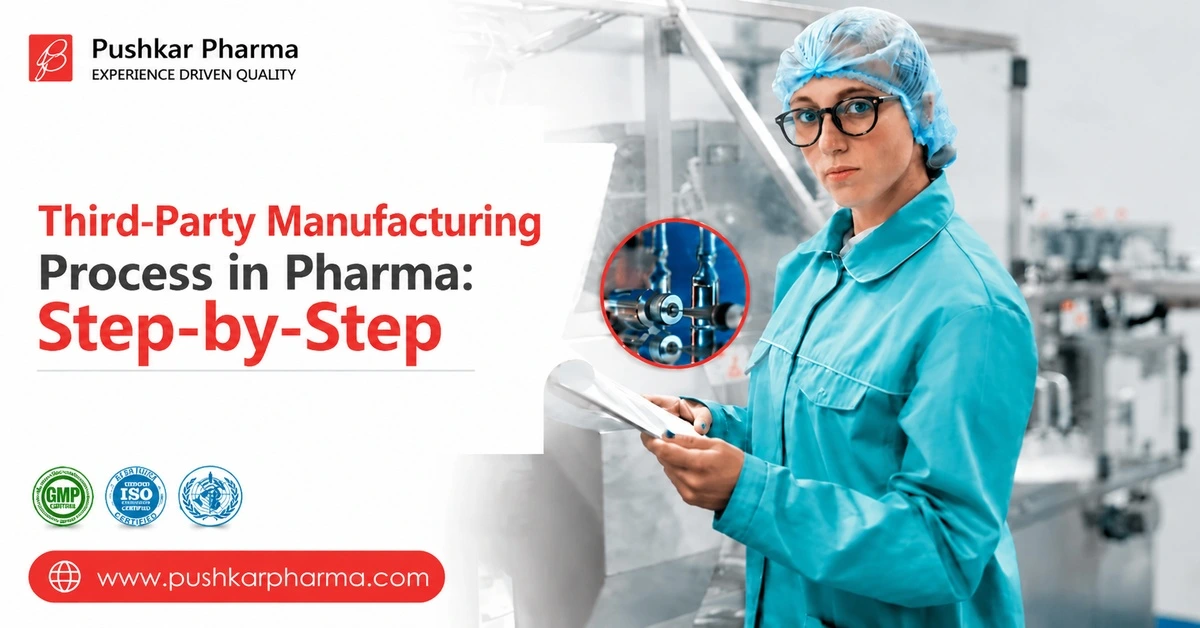
Third party manufacturing in pharma is when a licensed manufacturer manufactures medications for other companies’ brands. In addition, this system frees marketing organizations to concentrate on sales, physicians, and distribution while professionals manage manufacturing.
- First, the brand selects acceptable formulas and artwork designs.
- The partner factory then checks the raw materials’ licensing and quality.
- Medicines are then mixed, compressed, filled and packed in cleanrooms.
- Quality labs then test for potency, purity and shelf life.
- Finally, the final goods are safely delivered to the brand’s warehouse.
Additionally, this strategy reduces fixed overheads and accelerates go-to-market in high-volume therapeutic sectors through third party manufacturing in pharma. This enables new and emerging firms to scale quicker with less financial risk.
What are the key steps in third party pharma manufacturing?
Costing and Selection of Formulation
First, you choose compounds with high doctor demand and an obvious profit. Then you compare batch quotes from ₹1.5 lakh to ₹4 lakh. Then you examine the pricing of raw materials, packing charges and taxes before you place the orders during the third party manufacturing process.
Brand documentation and approval
Next, you provide medication licenses, GST registration and trademark paperwork to the factory. Then the compliance teams check the brand names to make sure they are not confused with other brands. Finally, both sides sign a clear agreement on the manufacture.
Sourcing & Testing of Raw Materials
Quality teams then purchase Active Pharmaceutical Ingredients and excipients from recognized vendors. Then analysts conduct laboratory checks on each received batch. Therefore, bad materials are discarded before production begins in this step by step third party manufacturing workflow.
Production, Packaging and Batch Release
Strict cleanliness is now a requirement for qualified personnel who run tablet presses, capsule fillers, or liquid lines. Printers add barcodes, batch numbers and MRP data in the meantime. And last, after passing lab testing, quality assurance approves the third party manufacturing process.
Inventory Planning and Dispatch
Logistics staff pack containers for safe interstate travel on release. Furthermore, you monitor order lead times of 25 to 40 days. This is because timely reordering will help avoid any stockout during the season.
What documents, quality checks & regulatory approvals are needed for third party manufacturing?
Third party manufacturing step by step ensures compliance and audit readiness of each batch.
| Requirement Category | Key Item or Standard | Practical Purpose in Pharma |
| Business & Tax Proof | Drug License (Wholesale/Retail) & GST Certificate | Legal proof for dispensing drugs and getting tax benefits. |
| Brand Identification Proof | Certificate of Trademark or Non-Infringement Affidavit | Legal protection for your brand name and its packaging design. |
| Facility Certifications | WHO-GMP, ISO 9001 and Revised Schedule M | Legal proof of authenticity of clean rooms, calibrated machines and quality systems. |
| Quality Control Checks | Raw Material COA, In-Process Checks and Stability Data | Legal proof of strength, solubility and safety of the active ingredient. |
| Regulatory & Packaging Rules | CDSCO/State FDA Approval, QR Code and MRP Labelling | Legal proof for compliance and proper pricing for the consumer. |
Why Should You Choose Pushkar Pharma for Dependable Third Party Pharmaceutical Manufacturing Services?
Proven Manufacturing History
First, Pushkar Pharma has years of on-ground production experience in various dosage forms as a leading pharma third party manufacturing company in India. Also, operators work under standard operating procedures that keep yields in each batch constant. Partner brands get reliable supplies without manufacturing issues.
Modern Cleanrooms and Quality Systems
Cleanroom zones manage air quality, temperature and cross-contamination hazards. Furthermore, laboratory testing analyzes raw inputs & finished strips before shipping. That’s why every shipment fulfills stringent quality standards.
Wide range of therapeutic products
Then, a pharma third party manufacturing company in India assists partners to cover general, pediatric, orthopedic & wellness categories. Plus, varied batch sizes allow for trial launches and expanding demand. Thus, you grow your portfolio smoothly.
Transparent Pricing & Economics of Scale
Transparent quotes provide you with upfront expenses for material, conversion, and packing throughout the third party manufacturing process. For instance, the first investments in batches range from ₹1.5 lakh to ₹6 lakh based on pack volume. So you can plan your financial flow with certainty.
Fast support and turnaround
Pushkar Pharma helps partners with artwork approvals & shipment schedules on time. Also, responsive coordination addresses inquiries at fast in each step. This generates trust in your brand in competitive marketplaces.
The Bottom Line
Third party manufacturing may be a powerful development engine if you have the proper partner. Check certificates, test standards, and real per-unit expenses before signing. Always. With Pushkar Pharma, you have the advantage of disciplined execution backed by practical industry discipline. Meanwhile, a pharma third party manufacturing company in India can ramp up production with your growing prescriptions.
Most importantly, a third-party step-by-step production strategy in the third party manufacturing process preserves quality, profitability & long-term brand ownership.
FAQs (Frequently Asked Questions)
Can I establish a firm without a manufacturing unit?
Startups can tie up with licensed contract plants to launch branded pharmaceuticals with little initial working capital.
What impact would the new Schedule M have on small pharma brands?
Improved cleanliness, paperwork, and quality control raise the standard of partner factories and protect brands from expensive recalls.
What are the common reasons for variation in per-unit cost in contract batches?
Order quantity, raw API pricing, blister or alu-alu foil options, and lab testing required influence unit costs.
Why do brands hold a buffer stock between orders?
Buffer Stock prevents pharmacists from having empty shelves because it smooths out any peaks in the volume of prescriptions.
Who owns the brand name and the design of the packaging?
Under the manufacturing arrangement, the marketing company controls its registered brand name & unique artwork.
How can a brand check the quality credibility of a manufacturer?
Request legitimate GMP certifications, reports of site audits, sample certifications of analysis & clear batch testing methodologies.
Do prices of seasonal drugs change during peak months?
A good move is to book in advance because of high seasonal demand, which might make supply constraints in raw material sourcing tighter.
Is it possible for the two parties to carry out several dosages?
A large number of factories work with pills, capsules, syrups & topical products.
Why is my first manufacturing order delayed?
Timelines often slip on the front end due to incomplete licensing paperwork or delayed sign-off on artwork or procurement of specific packaging.
How often should a brand revisit contract manufacturing pricing?
Check pricing every 3-6 months. Look at API updates, packaging prices, volume discounts, etc.
Consumer Reviews
“Our first launch was a smooth process, thanks to Pushkar Pharma. We got early market momentum with clear timetables and consistent batch quality.”
Raghav Sharma
Brand Head
“Their team was transparent with pricing right from day one. Each shipment was neatly packed with correct batch details and no surprises on the bill.”
Pooja Verma
Pharma Distributor
“The structured coordination saved us weeks on artwork and compliance checks. Our team could focus on doctor outreach, and production stayed on track.”
Ankit Mehta
Healthcare Founder
“The consistent quality checks gave our sales force full confidence in every strip. As our demand in the region grew, reordering was a breeze.”
Neha Kapoor
Operations Lead